


You look in your rearview mirror, and there he is … he’s so close he could inhale exhaust fumes direct from your tailpipe, and he’s trying to mount your boot/trunk and drive into your back seat through the back window. Who is he? Who is this obsessed maniac that suddenly appears where there was no-one just a split-second before?
He’s the Italian driver, deadpan-faced and on a mission – to get as close as possible to the car in front.
Our friend Michael says it’s baked into their persona. After nodding in obedient agreement at an explanation of the benefits of a good trailing distance, he will promptly jump in his car and try to use his front bumper to scrape the dirt off the registration plate of the car in front of him. In short, he can’t help himself.
He? Most of the time, yes. But I must say that women have graced my rearview mirror more intimately than I would have liked on more than one occasion.
Women are more like men in the following respect – overtaking in hair-raising situations. Without losing their deadpan expressions. This is a curious phenomenon for a passionate and expressive people – an appearance so calm that one might be tempted to wave one’s hand in front of their faces to see if they’re conscious. It doesn’t matter what the scenario is either – they could just have had a layer of paint scraped off their driver’s door by a 10-ton truck going 120 km/h – pokerface.
But back to the overtaking. Lines – dotted, solid, or spotted – on the road mean nothing. Signs? Don’t know why they bother to put them up. Width of road? Immaterial. If they want to overtake – I think there’s a hormone that kicks in and "takes over" (sorry) – out they pull, and forward they go. It’s a rare occasion – imminent death (for themselves) being the only remote possibility – that they would pull back in at the same place in the traffic. And regardless of the closeness of the shave or the havoc they may leave in their trail ... deadpan.
It happens so frequently that, if I see a truck heading towards me on a single-lane-each-way road, I instinctively look for an escape route, and start considering how I might negotiate the ditch or rocky slope or river or whatever should someone’s bio-rhythms take them out into the oncoming traffic (i.e. me).
Sometimes they overtake even when there’s no-one to pass. This is a favourite practice on winding roads with blind curves. Our friend Al has a general overtaking maxim – the blinder the curve, the greater the irresistible urge of the Italian driver to overtake.
Al also has another maxim – if you’re a pedestrian and an Italian driver makes eye contact with you, you’re a-goner. It’s all over. This implies some degree of intent, and therefore assumes that said Italian is paying some degree of attention to what he is doing. This is far from being a given. Quite the contrary, in fact. It seems that Italians use their driving time to catch up on a few things, most notably talking on the phone (which they do all the time anyway and simply can’t help it), and day-dreaming (which they don’t have enough opportunity to do and therefore grasp the chance with both reckless hands).
Parking? This perhaps more than any other aspect of life here gives a visual insight into the Italian mentality. One could think of it as an avant garde design exercise. Parking bays? A waste of paint. Orderliness and organization? Huh? Blocking another parked car in when there’s oodles of space just 10 metres away is standard practice – it’s your own fault if you park yourself into such a vulnerable position. Protrusion into a traffic lane? Blocking the view of oncoming traffic? Pardon? It’s part of the design.
Take a look at Bruno Bonzetti’s classic portrayal of his native culture (http://www.infonegocio.com/xeron/bruno/italy.html), and pay special attention to the parking skit. (They are, by the way, all agonizingly accurate.)
Having said all this, I must say that driving on the freeways (which we do probably less than 30% of our driving time) is a refreshing experience when compared with the
What all of this ultimately adds up to is a precarious and pericoloso driving environment that doesn’t exactly rank amongst the best in the world – International Living ranks it amongst the 20 worst. This has a direct affect on the rates of insurance, which are I believe the highest in
It also has a sinister side – death. Here they cover wrecked cars with white sheets if there was a fatality. A few weeks ago, 4 young guys in a BMW were killed in the wee hours on a freeway somewhere up near
With all our technical know-how and innovation and capacity for creativity, how utterly foolish we can be at times ...


Every now and then life rears a head that we don’t pay attention to very often. And it reminds us not to take anything for granted.
Take the finger, for example. The index finger of your dominant hand, in particular. How often do you stop to think about all it has to do, and all that goes on inside it, when you straighten it, extend it, and stretch for something? I’ll bet you haven’t done this kind of thinking for a while (if ever).
But I have. Quite a bit too, for long seconds at a time, thanks to the deep slice that runs along a sizable part of my pointing digit.
It happened when Julius and I were on our way to a mountain ramble, and we stopped, as is our custom, to fill our water bottles from the mountain spring gushing out of the hillside next to the Fiastra road. Julius pointed out the icy patch to me, but my aging memory discarded the info when I turned to cross the road with a full bottle. The result was predictable – no traction on the shoe, out it flew from under me, down I went, unfortunately on the bottle side, and its glass shattered as I hit the tar.
It sounds cliché perhaps, but as I went down, it was almost in slow motion, and I thought ”Shit! I can’t stop this. I’m going to cut myself.” This was true.
It was a nice clean cut, deep, and it hurt like hell. So did the butt of my hand, which had a chunk of skin hanging from it, having taken the tail-end of the fall-and-break. But enough of the graphics. The finger needed 11 stitches, the base of the hand 5.
As a result, my left hand was called into immediate action to perform all sorts of tasks that it used to witness indolently as the right hand toiled. Like eating pasta, for instance, a vital life-sustaining task in
But it’s the stretching that’s the killer. I’ve learned to try and use my left hand when I can remember, or to keep my index finger bent when I have to use my right. But I forget, several times a time. And I pay. A sort of burning, buzzing, searing pain of a thing surges through my finger, and I’m compelled to stop what I’m doing – instantly. It happens when I’m doing something as simple as tossing a shirt over the chair, or putting a glass down on the floor next to the couch. These are not strenuous activities requiring great intellectual exercise. At least they didn’t use to be. Now unfortunately they are, and my life has become cluttered, with all sorts of considerations that were hitherto automaton tasks.
Ah well, everything’s a learning experience, right? There’s much to be thankful for. Like the fact that I didn’t fall face first on the road. Or that a car wasn’t coming along at the moment I fell.
And after the initial shock and resentment, my left hand has rather relished its new role, having its capabilities flexed and extended. I almost sense its disappointment as the finger begins its slow healing process.
It’s a bloodbath on the roads around Regnano these days. Utter carnage. Like a bizarre canvas of splattered over-ripe fruit, the splayed figures of countless frogs are paying the ultimate price of their unflinching response to the call of nature.
They’re generally out and about after the rain – and it has been raining recently – but the recent numbers are unprecedented, certainly for us. On one trip home from Italian lessons in Tolentino on the curling, undulating backroads, there were probably 20-30 in one 10-15m stretch. Given our beastly sympathies, we stopped, and I got out to try and get them off the road and out of the “splatter and splay” zone. But they would have none of it, completely ignoring my nudging foot.
On closer inspection, however, I understood why. Several of them were indulging in an activity of a particularly sexual nature, while the remainder were simply waiting their turn. I can only assume that they had some sort of inside knowledge that their indulgences would produce a sort of "positive net procreative balance" when weighed against the death and destruction they risked.
Another curious observation was that the females – a safe assumption, I think – were inordinately larger, by several factors, than the males. Veritable Big Berthas they were, squatting passively and staring into the night with a look of utter boredom. I guess procreation can be a drag, particularly when you’re just being used, as female frogs clearly are. If there were such things as frog cigarettes, I would have expected to see one dangling precariously from her ample lips.
So this, in the end, was the answer – the road, and in particular certain obviously erogenous sections of it, is a “hussy highway”, a sort of “madam’s mile”, as it were. But why the road? Why not the slushy, squelchy mire of the sodden fields? This would be, I’d hazard a guess, a more appropriate environmental accompaniment, somewhat more akin to the reptilian form of the activity they’re engaging in. Perhaps they are out there in the damp darkness in far greater numbers than on the road, and I just can’t see them. But I’m not convinced. Must be some form of aphrodisiac in the aggregate used to lay the roads.
The bestial carnal frenzy seems to be over now. There are many who gave their lives for the cause, now anonymous stains on the road, soon to fade into reptilian obscurity. However, there are still a few of them out there. I saw one the other night, sitting – hopefully, it seemed – on the side of the road, looking for Big Bertha. Maybe he was a blooming teenager, hoping to learn from the pros, or try a few moves of his own.
“Where is everybody?” he asks.
I don’t know what to tell him.
The toddler was crying. He had been for a while, a niggly, grisly, grating protest at his fatigue. The bespectacled woman, nondescript except for her piercing, nails-on-the-blackboard voice, was articulating a point with some passion. This involved projecting her strongest weapon at full volume, which for her was some decibels above anyone else. No mean feat.
Not to be outdone, the bespectacled man – anything but nondescript with his impish smile and artistic bent – was articulating a counterpoint. Simultaneously. They were talking to each other. Others were listening, although I’m not sure to whom, perhaps exercising an innate Italian skill, listening with one ear to each of two vocal combatants, much in the manner that a chameleon moves its eyes independently.
I couldn’t understand a thing.
The toddler cried, despite the attention of its mother. Others expressed concern (or at least appeared to, given my reliance on facial expression and body language for translation and interpretation). I thought I must be missing something – surely he would be taken to another (quieter) room, away from the cacophony of deafening competing opinions? Apparently not. It was like the frustrating experience of watching a poor spider falling continuously each time he tried to scale a (for him) precipitous slope, when a gradual slope invited his ascent just an inch or two away.
It was
Julius and I had arrived at what I thought was fashionably late, 15 minutes beyond the appointed hour – 9:15 pm – only to find that we were the first to get there. By half an hour. I should be used to this now, I suppose – arriving within half an hour after the agreed time is considered early. Perhaps I’m just confused by the one clear anomaly to this rule – school pick-up time, when a tardiness of just 5 minutes will greet you with a ghostly, deserted school, and possibly even a mild reprimand.
Back to the night out – 5 families, including the host and us, with 7 kids in total. Games for the kids, and discussion for the adults. And food, of course, a table-full of snacks (this being an after-dinner gathering), which kept getting refreshed with roasted chestnuts, along with a wide selection of sugar and starch. Perfect late-night fodder to sink like a lead weight into fitful sleep.
The mother of the toddler eventually left to take him home to sleep – perhaps a rather extreme and overdue solution – leaving his bespectacled father to continue his verbal bout with the bespectacled woman. At around
I feel lucky that we were invited to such a gathering. Stranieri (foreigners) in a local scene. And frustrated that I could barely understand a thing. It prompted me to look more earnestly into Italian lessons. After all, why shouldn't I be able to don my spectacles, express my opinion, and make my contribution to a toddler's sleeping habits ...
Just another example of how this country is nothing if not a smorgasbord for the sens es. While the auricular is perhaps the sense most impacted by the Italian experience, the olfactory is not far behind. And right up there is the intense, impossible-to-dislike, unmistakable aroma of coffee. It’s everywhere – in the piazza, walking on the beachfront promenade, idling past ancient monuments … and taking a break on a mountain trail in the
Yes indeed, there we were at the hand-built hermitage – church, really – of San Leonardo in the Gola dell’Infernaccio (Hell’s Gorge), when the whiff coming from the Ancona man’s coffee pot atop his portable gas stove turned every head of the 30+ hikers in the vicinity. It was the trigger for a bout of good-natured verbal sparring between his party of a dozen or so and ours of similar size. As part of the repartee, we were treated to coffee laced with Sambuca, no less – no need to scrimp and deprive yourself just because you’re in the mountains.
At the risk of stating the obvious, Italians are a social people. To extend the risk somewhat further, they’re also sensual, as in “I want some of whatever it is that’s generating sensory overload.” Perhaps we would have interacted with the
 The Gola dell’Infernaccio is a dramatic, twisting passage through curved, jagged cliffs that turn back on each other as the Tenna River finds its way down from its source on the mountain slopes. The path through the gorge ends up in
“Ciao!” he says, arm and fingers raised in crooked salutation. They create an apt frame for his round head, bent forward and sideways in focused gesture. From eyes that lodge deep in the hollow sockets of a face shaped by eons of trial and toil, Vitaliano looks out at the world.
What does he make of these stranieri, these inglesi, who have begun to invade his land, surrounding him with their blustery exuberance and stone houses renovated to a condition that he’s been trying to leave behind all his life? Why are they here?
Life is hard for him – 70 years old with a frame that’s starting to creak, and still he has to work the land on his own. And yet here he was today, early February, mid-winter, offering us lettuce with the fresh earth still dripping from its leaves. We are neighbours. And as strange as we may be to each other, we look out for each other.
Vitaliano is the quintessential contadino. That means peasant, and in spite of it seeming to rankle of derogation (at least to me), it’s widely used to describe any class of people who are freeholders and who work the land. Their roots go deep into this earth, going back who knows how many generations, and they simply cannot be anywhere else – this is where they belong. It’s as simple as that.
Vitaliano’s house is an unfinished project, beyond his means but not his dreams. Stepping inside it for the first time – which we did to give he and Orellia (his wife) their Christmas gifts (mainly clothing) – it appeared from the state of the kitchen/dining room/lounge as if the plot of the dream has yet to take coherent shape. He was clearly uncomfortable to have us surprise them unannounced, and in retrospect I wish we hadn’t – despite their humble lives, they have a pride which hurts when dented.
When we first met Vitaliano during our September 2005 visit to see how our house was doing, he asked if our offering of chocolate was because we wanted to be his friend. We said yes. I might be misinterpreting his attitude at the time, but I remember it as edged with aggression, given that the previous owner was like a brother to him. But there’s nothing like that now, and I’d say there’s a solid respect between us, each with our own reason and different perspective.
He is nothing if not generous in sharing what his land produces and supports. Last week we ate the pigeons he gave us – plucked and frozen, thank heavens – with a few sprigs of rosemary from the veritable bush that he gifted us along with the birds. (All contadini around here keep pigeons, it seems, as a food source, fiddly and finicky as it is to eat them – for all we know, they’re a delicacy.) We still haven’t made it through his bunch of garlic, and we remember the fall and his earth-caked tomatoes, hand-picked from his vegetable garden. These are the things we came to
And then we have our points of departure. Treatment of animals, for instance. Apparently, last spring his dog (Hyena, from a previous post) had four puppies. Vitaliano decided that his environment could only support one. He killed the other three. (I’m not sure how, but perhaps that’s irrelevant.) This is his crude form of birth control. He must have wondered at our obvious grief at Mr Young’s death – he was just an animal, after all.
The most obvious emblem of the contadino is the Piaggio, or cocolore as Maria has named them – 3-wheeled scooter bugs made by Ape (pronounced “ah-peh”) with one seat in the semi-open “cab” in the front, and a small open pickup-type bed on the back. Seeing them buzzing – “buzz” being used here to convey sound rather than speed – with a laboured whine on the curving roads is confirmation that you’ve arrived in rural Italy. Like their brethren Vespa, buzz-thing of the Italian urbanite, cocolore are veritable institutions for the contadini who putt-putt around in them from farm to market to church to neighbour.
Vitaliano, of course, has one. It’s his only form of transport, frequently getting him and his wife Orellia all the way to Tolentino and back. Seeing the two of them spilling out of its open sides triggers thoughts of scenes from some sort of weird, creepy movie (The Twilight Zone springs to mind). Massimo, their bus-driver son, has a car, but I’ve only ever seen Orellia in it once, and never Vitaliano.
Massimo, a miniature version of Vitaliano, bald spread and all, spends a few nights a week here. He recently sold his Mercedes to an Albanian – it had 600,000 km on the clock. I wonder what he got for it. Sometimes he brings the bus over to get an early start in the morning for one of his longer trips to
Regnano’s little microcosm has taught me never to be surprised at what you might find here. Naturally, I still am. I wonder how we contribute to its flavour – I sincerely hope it’s in some tasty way. It is certainly changing – with an English couple, an Australian couple, and a South African-German-American family all within eyeshot of each other, how can it not? But here’s a hope – that we don’t change Vitaliano and his values, and if we affect his life at all, that it’s in a positive way.
I have an aversion to hospitals. It’s not because they’re associated with illness and injury, or because they have that memory-triggering, clinical smell, or even necessarily because of the practices (and malpractices) perpetuated in them. Instead, it’s first and foremost because of the mounds of red tape and hours of waiting involved every time you step near one. At least that’s the way it is in the
So when I sliced my finger nice and deep after slipping with a glass bottle in my hand, I was more inclined to take the path of natural healing than the path to the hospital – clean the wounds, pull them closed, cover them up, and then bandage them securely. However, six hours after having done this, when the pain and bleeding hadn’t stopped, it seemed as if it might be prudent to get another opinion.
Not having a family doctor to call on, we headed for the hospital in Tolentino, where we expected Italian bureaucracy to stand tall, proud, and in the way. I took 3 books in anticipation of the wait, to accommodate the several mood swings that I anticipated during the hours we would be waiting see a doctor.
We arrived, and, to my surprise, found a parking within walking distance of the emergency room – a novelty when compared with the States. At the front desk (where nobody asked us to fill out a form), we were duly directed to the right place, which, instead of involving a maze-like path following a yellow line, simply required going down one flight of stairs.
When we stepped through the doors in front of us, we were in it – the emergency room, that is. No counter with a diversionary clerical squad asking for cards and IDs and mother’s maiden name … just a nurse and a doctor. Within the first minute, my bandages were off and the nurse was cleaning my wounds (vigourously) while the doctor got my details from Maria – all he asked for was my ID card and where I was born. Then he came over and stitched me up. We were in and out of there in just over an hour, of which perhaps 3 minutes was spent on administrative stuff.
Of course our experience was helped by the fact that there was no-one else requiring attention, and the only flurry of activity involved a changing of shift. But still – this experience beats anything I’ve ever encountered. It’s no wonder the World Health Organization consistently ranks
After the shock of the accident wore off, the shock of the ultra-efficient hospital experience still had me in a daze. I almost didn’t notice, as I got into bed, that the anesthesia had worn off and they hadn’t given me any pain killers …
Aside from the cheap airfares, another advantage of living in Europe is that you can get in your car in the morning and be in another country in the afternoon. Of course, being in relative proximity to Maria’s parents, Christmas in Germany was a given.
It took 10 hours to get there, driving through northern Italy, western Austria, and Bavaria in southern Germany, a relatively pain-free passage. Traffic going the other way was stopped dead, in some places, for 10km, without any apparent reason. Driving on European expressways is a pleasure, too, since, unlike the US, people know what lanes are for, and “the fast lane” has true meaning.
The two-week visit was tainted by Mr Young’s death within an hour of arriving, but in some ways it was the best place it could have happened, with loving and caring family and friends around to provide solace to Julius and Maria.
The Advent calendar is very big in Germany, and many towns – Forcheim near Maria’s parents being a great example – have larger-than-life calendars in the central plaza, accompanied by the ubiquitous Christkindlmarkt. Niklaus (Santa Claus) himself comes on December 6th, and the tree is decorated and gifts are exchanged on the 24th. We enjoyed venison and goose with Maria’s sister on the 24th, attended a (long and laborious) Christmas service at 10pm, and the next day stuffed ourselves again with duck at Maria’s parents.
New Year’s eve was spent with friends of Maria, culminating in fireworks all over the village at midnight. Fireworks are freely available to the public, and Germans spend some €60M on the stuff at New Year. Amazingly, there are very few incidents of injury. Imagine the same in the US – it would be pandemonium, if not life-threatening, providing ample reason enough to stay at home on New Year’s eve.
Aside from the obvious value time with family, we enjoyed good beer, schnapps, and food, with fish – carp (a local specialty), mackerel, and “waller” – on a few occasions providing welcome relief from the ever-present carnivorous diet. Also played some great tennis (for the first time in years) with some 40- and 50-something-year-olds. Strolls in the woods and exploring on bicycles with Julius were amazingly (in comparison with rural Italy) free of barking and attacking dogs – on one occasion as we approached a particularly large yet obedient and unexcited German shepherd, I said to Julius: “If we were in Italy, I’d turn around and flee.”
Julius didn’t want to leave, wanting to make sure that the candle on Mr Young’s grave was kept alight, and the fact that it would just “be easier” to stay in Germany. Maria’s parents were of the same opinion, and I heard from her mother about the folly of our Italian escapade on a few occasions.
Parting is always hard, and it was no easier on this occasion – I have this picture in my mind of Maria’s aging and frail parents standing tearfully and forlornly in their doorway as we drove away. The 1,057km drive took 11 hours coming back, with one long 25km stop-start stretch around Munich costing us the extra hour. Getting back to the house without Mr Young was, of course, wrenching, and it felt totally empty.
But being back in Italy helped also to highlight the stark differences between these two countries separated by a mountain range and a cultural chasm. Here are just a few:
Walking through the streets in Germany I was struck by how, well, Germanic everyone looks – square jaws, thin lips, deep-set eyes, strong bones. Duh? I guess somehow I don't subscribe to generalizations. In this sense, though, the Germans seem to conform to their caricature.
However, in another sense – efficiency, reliability – they did not, although I’m not sure if it was the Internet curse I brought with me that was the cause. The network of the only wireless hotspot I found was not working on the day I dedicated to catching up …
 itate shuttles between countless countries and cultures. At the end of November, we took advantage of one, from Ancona (our closest airport, an hour or so away) to Liverpool. €1 per person each way, plus tax, making it a total of €118 for all 3 of us. (That, however, is where the economic side of things ends – England, with its super-strong pound, is very expensive in euros, never mind dollars!)
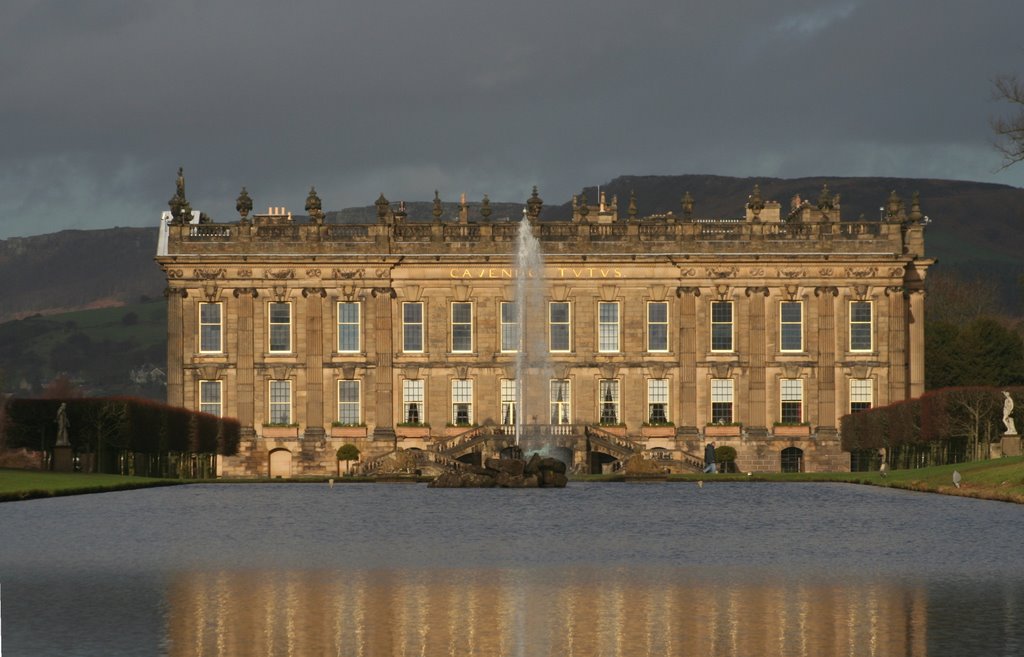
 We flew in and out of Liverpool, and were treated to the warm and welcoming hospitality of our friends and landlords, Al and Vron, in West Yorkshire in the High Peaks area. Aside from being just a bloody good time being together, we got to see York and its Minster, Whitby with its moody abbey ruins on the blustery coast, and the stately Chatsworth, home of the Duke of Northumberland. Had fish ‘n chips in Whitby, Yorkshire pudding at home (along with several other superb meals), drank some good bitter in a few warm pubs, and watched the SA vs World XV rugby game live on TV (going to the game was the original impetus for the trip, but it just didn’t work out).
 explosive ingredients, or that they are secretly funding Al Qaeda operations? The England of olde – friendly bobbies without weapons – is clearly a thing of the past. Apparently, there is more surveillance in the UK than anywhere else in the world. Perhaps this is all necessary. I don’t know. All I know is that it’s a shame.
 There’s a spirit burning brightly in the winter air beneath Julius’ tree in his grandparents’ garden in Röttenbach, Bavaria. Our beloved Mr Young lies there, a premature victim of the stress that our roving lives created for him. Julius has lost his brother and best friend, and we a loving member of our family.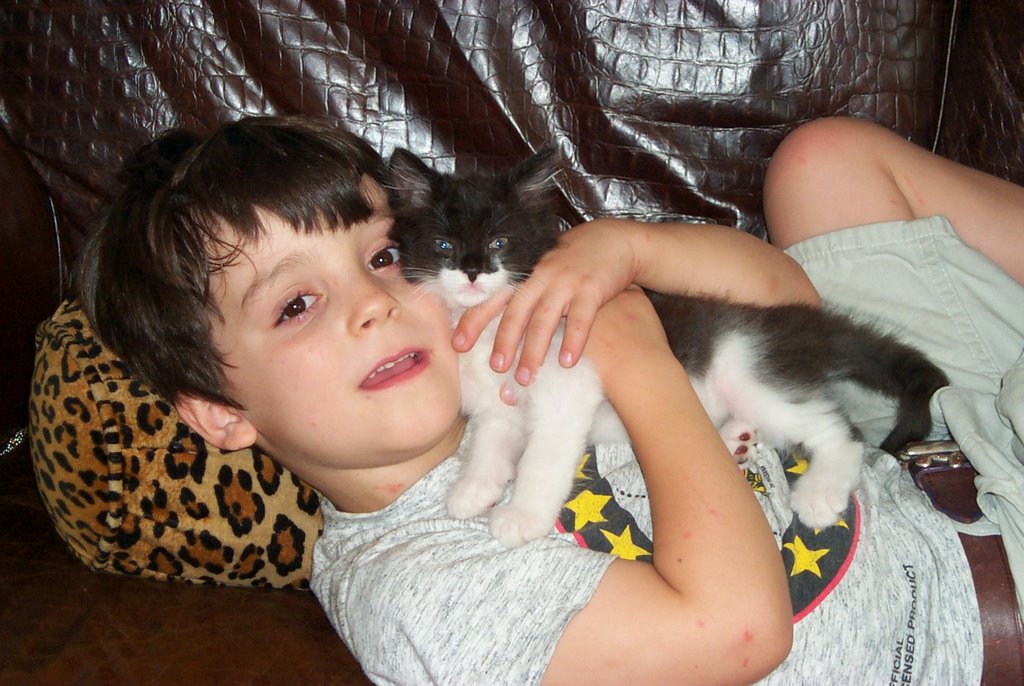

 ning from the vet hospital, every time we went out, he sat at the front door, waiting for us to return.
  subliminally chose not to – and he died less than an hour after arriving in Germany. We simply shouldn’t have left. We shouldn’t have left.


